
 By sarcastic_guy
 Introduction: A Quiet Shift on the Warehouse Floor
A loading bay at sunrise tells a lot about a business. A pallet stacker waits beside dock door three, lights low, routes drawn on a floor that still smells of last night’s work. By 8 a.m., targets hit: 320 pallets moved, 98.7% on-time dispatch, two near-misses logged. Not much noise, yet a clear story. The cost of one misroute is hours. The cost of one delay is a truck queue stretching down the block—funny how that works, right?

Across many sites, managers face the same math. Labor gaps, rising volume, tight aisles, tall racks. Add battery swaps and training cycles to the mix. The numbers point to change, but which change fits? Is it more people, more hardware, or smarter flow? And if throughput climbs, does error risk rise with it? Small choices shape the whole shift (and the night shift too). Here’s where a thoughtful comparison helps. Let’s move from what we see to what we can measure, and why it matters next.
Where Legacy Methods Fall Short
What keeps “good enough” from being great?
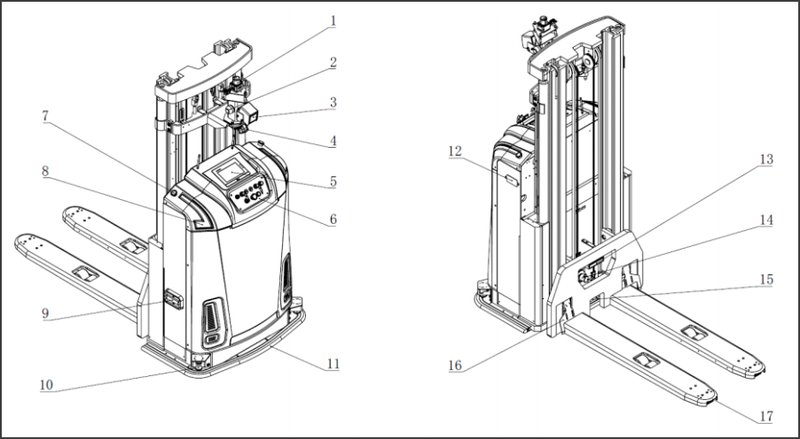
Most traditional fixes focus on adding units or re-training drivers. Yet the bottleneck hides in decision flow and repeatable motion. An automatic pallet stacker changes the center of gravity here by tying sensing, control, and routing into one loop. Look, it’s simpler than you think. Onboard LIDAR and depth cameras reduce blind spots at the load center. Edge computing nodes handle real-time path planning. Power converters balance torque and battery draw, so lift and travel don’t fight each other. With manual rigs, a missed fork height or a rushed turn multiplies risk. With auto, the micro-choices stabilize. That matters when racks are tight and SKU counts are high.
Legacy semi-auto gear still relies on line-of-sight moves and memory. It scales poorly as layouts change. PLC tweaks, badge permissions, and paper labels get messy fast. Training cycles reset with turnover. Battery swaps break rhythm. And re-aisling even one zone can throw off the whole shift. The automatic loop uses localization and fleet telemetry to keep updates live—no long pauses for retraining. It doesn’t remove humans; it removes guesswork. Less drift, fewer rehandles, smoother handoffs. The result is not a flashy jump. It’s steady, compound gains that protect uptime.
Comparing Principles, Not Just Specs
What’s Next
Now shift the lens to how the system thinks. Old models centered on operator skill and static routes. New technology principles center on sensing, inference, and harmonized motion. An automatic pallet stacker fuses LIDAR, inertial navigation, and camera data into one map—then updates it every second. That map is not a picture; it is intent. The controller predicts cross-traffic, checks fork carriage tilt, and adjusts acceleration to keep the load stable. When a person steps in, it yields. When a pallet shifts, it rebalances. Small, fast choices—again and again. And yes, that reduces the quiet costs you rarely see on a dashboard.
Think about integration next. The better systems expose APIs to WMS and MES, not just bolt-ons to a lone PLC. Data moves both ways. Task queues flex, battery management aligns with shift breaks, and alerts surface before downtime. A fleet manager views utilization, queue depth, and exception heatmaps in one pane. That’s where comparative insight pays off: not in raw lift height alone, but in how changes propagate through the shift. To choose well, keep three metrics close: 1) time-to-first-pick after a layout change; 2) variance in cycle time at peak hour; 3) recoverability after a blocked aisle (seconds, not minutes). Systems that score high here tend to win over months, not days—because resilience compounds. For more grounded thinking on this, see SEER Robotics.
 Ethan Riley
  quadro_bike