
 By AsimAli
Solar energy has become an increasingly popular solution for households, businesses, factories, and commercial buildings across Pakistan. With rising electricity costs and frequent power interruptions, many people are investing in solar systems to reduce their electricity expenses. However, the growing demand for solar technology has also increased the risk of counterfeit, low-quality, and misleadingly advertised solar panels in the local market. Knowing how to identify genuine products is essential before making an investment.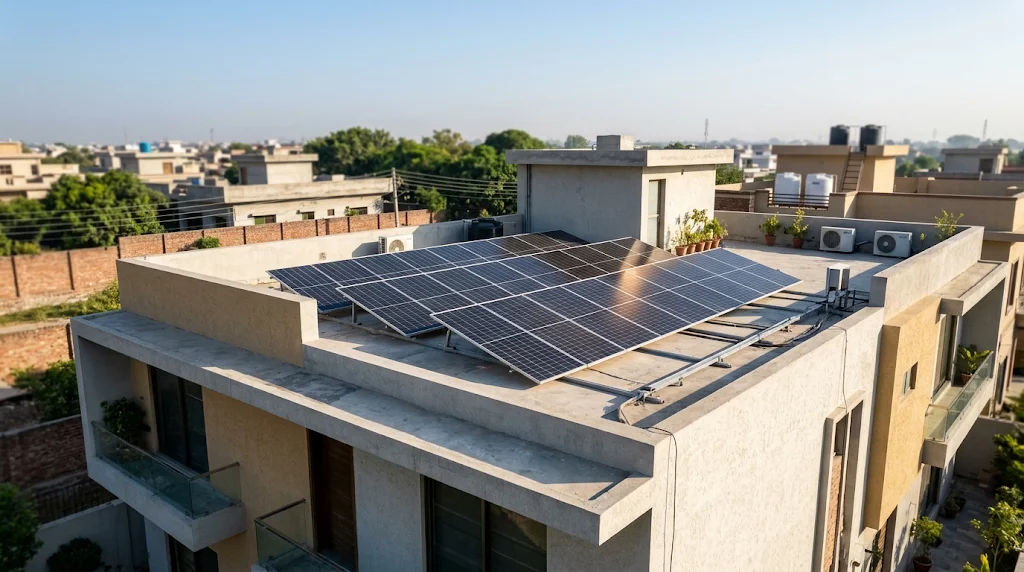
One of the biggest challenges for buyers is distinguishing authentic solar panels from fake or refurbished products. Many sellers advertise attractive specifications, impressive warranties, and competitive Solar panel price in Pakistan offers to attract customers. Unfortunately, not every product available in the market delivers the performance promised by its manufacturer. Some panels may have altered labels, incorrect power ratings, or unclear manufacturing histories.
Checking solar panel authenticity requires more than examining the appearance or comparing prices. Buyers should understand manufacturer information, serial numbers, electrical specifications, certification documents, warranty conditions, and physical quality. These checks can help prevent unnecessary expenses and ensure that the selected panels provide reliable electricity generation for many years. This comprehensive guide explains practical methods for identifying genuine solar panels and making informed purchasing decisions in Pakistan.
Why Solar Panel Authenticity Matters in Pakistan
Solar panels are long-term investments. A properly manufactured panel can continue producing electricity for decades, although its output gradually decreases over time. Purchasing a counterfeit or poor-quality product can reduce the financial benefits of installing a solar system.
Authenticity matters because genuine panels are manufactured according to specific quality standards. Their electrical performance, durability, and safety characteristics are tested before they reach customers.
Fake or improperly refurbished panels may create several problems, including:
-
Lower electricity production than advertised.
-
Faster performance degradation.
-
Poor resistance to environmental conditions.
-
Inconsistent electrical output.
-
Difficulties claiming warranty services.
-
Additional maintenance and replacement expenses.
Pakistan experiences high temperatures, dust storms, humidity, and seasonal rainfall. Solar panels must withstand these environmental conditions. Genuine products from established manufacturers generally provide documented information about their performance under different operating conditions.
1. Check the Manufacturer's Name and Brand
The first step in verifying authenticity is checking the manufacturer's identity. Established solar manufacturers usually maintain official websites, product catalogues, technical documents, and customer support departments.
Before purchasing a panel, carefully examine its brand name and manufacturer information.
Look for the following details:
-
Complete manufacturer name.
-
Official company logo.
-
Product model number.
-
Manufacturing location.
-
Technical specification sheet.
-
Manufacturer's official website.
Solar panel price in Pakistan with products carrying unfamiliar brand names that closely resemble established manufacturers. Counterfeit sellers sometimes use similar logos, altered spellings, or misleading packaging to make products appear genuine.
Visit the manufacturer's official website and compare the panel's model number with its published product catalogue.
If the model cannot be found, contact the manufacturer or its authorized representative for clarification.
Verify the Manufacturer's Official Presence
A genuine manufacturer should provide consistent product information across its official documents and sales channels.
Check whether the company publishes technical specifications, installation instructions, warranty information, and product certifications.
You should also confirm that the manufacturer's contact information is legitimate. Avoid relying entirely on advertisements, social media posts, or information provided by an unknown seller.
2. Verify the Solar Panel Serial Number
Every genuine solar panel normally carries an identification label containing important product information. Its serial number helps identify the individual panel and can support authenticity verification.
The serial number is commonly printed on a label attached to the back of the panel. Depending on the manufacturer, it may also appear on the packaging or accompanying documentation.
When checking the serial number, follow these steps:
-
Locate the identification label on the back of the panel.
-
Find the serial number and model number.
-
Photograph the label for your records.
-
Visit the manufacturer's official website.
-
Contact the company or authorized distributor.
-
Ask whether the serial number matches its manufacturing records.
Some manufacturers provide online verification systems, while others require buyers to contact customer support.
Do not assume that a printed serial number automatically proves authenticity. Counterfeit products can carry copied identification numbers. The manufacturer must confirm that the number corresponds to a genuine product.
Check for Duplicate Serial Numbers
If you are purchasing multiple panels, examine their serial numbers individually.
Different panels should have their own identification numbers. Repeated numbers, damaged labels, inconsistent formatting, or suspiciously altered identification marks deserve further investigation.
For larger installations, maintain a written record of every panel's serial number. This documentation can be helpful when requesting warranty support or reporting a product problem.
3. Examine the Solar Panel's Physical Quality
Physical inspection is another useful way to identify potentially counterfeit or damaged solar panels.
A genuine solar panel should have a consistent manufacturing finish. Its frame, glass surface, junction box, cables, and identification label should appear professionally assembled.
Pay attention to these features:
Glass Surface
The front glass should appear clean, smooth, and properly installed. Look for visible cracks, unusual scratches, cloudy patches, or signs of previous repairs.
The glass should be securely fitted into the frame without obvious gaps.
Aluminium Frame
Examine the frame for bending, corrosion, loose joints, or poor finishing. A properly manufactured frame should be straight and firmly connected.
Solar Cells
Inspect the visible solar cells for unusual colour differences, cracks, irregular patterns, or obvious manufacturing defects.
Minor differences may occur between cell technologies and production batches, so appearance alone cannot establish authenticity.
Junction Box and Wiring
The junction box should be securely attached to the back of the panel. Check that the cables and connectors are properly fitted and that there are no exposed or damaged electrical connections.
Never open electrical components or attempt unsafe testing yourself. Ask a qualified solar technician to inspect suspicious products.
4. Compare Technical Specifications With Official Information
Technical specifications provide important clues about a solar panel's authenticity.
Every genuine model has a published specification sheet explaining its electrical characteristics and operating conditions.
Important specifications include:
-
Rated power output.
-
Maximum power voltage.
-
Maximum power current.
-
Open-circuit voltage.
-
Short-circuit current.
-
Module efficiency.
-
Operating temperature range.
-
Dimensions and weight.
-
Temperature coefficients.
Compare the information printed on the panel's identification label with the manufacturer's official datasheet.
For example, if a panel is advertised as having a particular power rating, its model number and electrical specifications should match the manufacturer's published information.
Be cautious when sellers advertise exceptionally high wattage without providing a verifiable datasheet.
A product's advertised output should never be accepted without checking its actual model specifications.
Understand Wattage and Efficiency
Wattage indicates the panel's rated power under standardized testing conditions. Efficiency describes how effectively the panel converts available sunlight into electricity.
These measurements are related but are not identical.
A larger panel may produce more electricity without having a higher efficiency percentage than a smaller panel.
Understanding these differences helps buyers avoid misleading marketing claims.
5. Check International Certifications
Certifications provide additional information about a solar panel's quality and safety testing.
Reputable manufacturers generally publish relevant certifications and testing documentation for their products.
Some important standards include:
IEC 61215: This standard relates to the design qualification and type approval of terrestrial photovoltaic modules. It evaluates performance and durability under specified testing conditions.
IEC 61730: This standard addresses photovoltaic module safety qualification and helps evaluate electrical and mechanical safety requirements.
ISO 9001: This certification relates to quality management systems within an organization. It does not independently prove that every individual solar panel is genuine.
Buyers should check whether certification documents identify the correct manufacturer, model, and applicable standard.
Do not accept a certificate simply because the seller displays a printed document. Verify the issuing organization and document details whenever possible.
Also remember that certification marks can be copied. Independent verification is more reliable than visual inspection of a logo.
6. Understand the Solar Panel Price in Pakistan
Price comparison is another important part of checking authenticity. Solar products are available at different prices depending on their technology, manufacturing quality, power rating, brand, and warranty conditions.
However, an unusually low price can indicate a potential problem.
Some sellers offer counterfeit, damaged, refurbished, or older inventory at attractive rates. Buyers who focus entirely on saving money may overlook important product information.
Before making a purchase, compare the Solar panel price in Pakistan across several reputable suppliers.
Consider these factors:
-
Manufacturer reputation.
-
Panel wattage and efficiency.
-
Product condition.
-
Warranty coverage.
-
Availability of genuine documentation.
-
Importer or distributor reliability.
-
Delivery and installation costs.
A lower price does not automatically mean a panel is fake. Genuine products may become more affordable because of market competition, changing inventory, or updated product models.
The important point is to understand why a particular product costs less than comparable alternatives.
Ask the seller for a proper quotation that identifies the manufacturer, model number, rated wattage, quantity, and warranty conditions.
7. Check Warranty Documents Carefully
A warranty is an important part of solar panel ownership. Genuine manufacturers generally provide product warranty information and long-term performance warranty terms.
However, buyers should understand that these are two different forms of protection.
Product Warranty
A product warranty generally covers specified manufacturing defects and material problems during the stated warranty period.
The duration and conditions depend on the manufacturer and product model.
Performance Warranty
A performance warranty concerns the panel's electricity-producing capacity over time.
Solar panels naturally experience gradual power degradation. Manufacturers usually specify an expected performance level after particular periods.
Before purchasing, carefully examine the warranty document.
Check whether it includes:
-
Manufacturer's complete name.
-
Exact product model.
-
Warranty duration.
-
Covered defects.
-
Performance guarantees.
-
Claim requirements.
-
Authorized service information.
Also ask whether the warranty is supported locally in Pakistan or requires communication with an overseas manufacturer.
A seller's verbal promise is not a replacement for official warranty documentation.
8. Purchase From Authorized Solar Panel Dealers
Choosing a reliable supplier can significantly reduce the risk of purchasing counterfeit products.
Authorized distributors generally have established relationships with manufacturers and can provide genuine product documentation.
Before selecting a dealer, consider the following points:
-
Check the company's business history.
-
Ask for proof of authorized distribution.
-
Review previous customer experiences.
-
Request a detailed purchase invoice.
-
Confirm the warranty claim procedure.
-
Ask whether the dealer provides after-sales support.
Avoid purchasing expensive solar equipment from unknown sellers who refuse to provide proper invoices or manufacturer information.
You should also be cautious about sellers who create unnecessary pressure by claiming that a special offer will disappear immediately.
Take enough time to examine the product before paying.
9. Understand A-Grade, B-Grade, and Refurbished Panels
Solar panel grades are frequently discussed in Pakistan's solar market. Understanding these terms can help buyers avoid confusion.
A-Grade Solar Panels
A-grade panels are generally marketed as products meeting the manufacturer's specified quality and appearance requirements.
They should have proper identification, documented specifications, and applicable warranty coverage.
However, the term A-grade should still be supported by reliable manufacturer information.
B-Grade Solar Panels
B-grade panels may have cosmetic imperfections or other quality differences depending on the seller's classification system.
Their actual condition, performance, and warranty should be independently verified.
Do not assume that every B-grade panel is counterfeit. However, buyers should understand exactly what they are purchasing.
Refurbished Solar Panels
Refurbished panels are previously used or repaired products that may have been prepared for resale.
They are not necessarily fake, but their condition and remaining performance life may differ from new products.
Ask the seller to disclose whether the panel is new, used, repaired, or refurbished.
Never pay the price of a new product for an item whose previous condition has not been disclosed.
10. Request Professional Solar Panel Testing
Professional testing provides additional confidence when verifying a solar panel.
A qualified solar technician can inspect the product and evaluate its electrical performance using appropriate equipment.
One commonly used method is an I-V curve test.
This test examines the relationship between current and voltage under specified testing conditions. It helps evaluate whether a panel performs consistently with its expected electrical characteristics.
Another useful method is an electroluminescence inspection, which can help identify certain internal cell defects that are not easily visible during an ordinary physical inspection.
Professional testing may be particularly useful when purchasing large quantities or investing in a commercial solar installation.
Check Actual Power Output
A technician may also measure the panel's electrical output under suitable sunlight conditions.
However, the results depend on sunlight intensity, panel temperature, shading, and testing equipment.
Therefore, measured output should be compared with the manufacturer's specifications after accounting for the testing conditions.
A single outdoor measurement should not be treated as conclusive proof of authenticity.
11. Check Importer and Supplier Documentation
A large proportion of solar equipment available in Pakistan enters the market through importers and distributors.
Proper documentation helps establish the product's supply history.
Ask the supplier for relevant purchasing records, import documentation where applicable, and product invoices.
The documents should contain consistent information about the brand, model, quantity, and product description.
Check whether the seller's business details match the information on the quotation and invoice.
For commercial purchases, documentation becomes particularly important because buyers may need to verify large shipments and maintain equipment records.
If a supplier refuses to provide basic purchasing documents, consider it a warning sign.
12. Be Careful With Unrealistic Sales Claims
Some sellers use exaggerated advertising to attract customers.
They may promise unusually high electricity production, extremely long performance periods, or guaranteed savings without explaining the assumptions behind those claims.
Remember that solar energy production depends on several factors.
These include:
-
Available sunlight.
-
Panel orientation.
-
Installation angle.
-
Dust accumulation.
-
Shading.
-
Operating temperature.
-
Inverter efficiency.
-
System maintenance.
Even genuine high-quality solar panels cannot deliver identical electricity production throughout the year.
Before accepting a seller's promises, request a realistic system performance estimate based on your location and installation conditions.
A professional supplier should explain both the benefits and limitations of the proposed solar equipment.
Common Mistakes to Avoid When Buying Solar Panels
Even informed buyers can make mistakes when purchasing solar equipment.
Avoid these common problems:
Ignoring serial number verification: A printed identification number should always be checked with the manufacturer when verification services are available.
Trusting attractive packaging: Professional packaging does not guarantee that a solar panel is genuine.
Focusing only on wattage: Higher advertised wattage does not automatically indicate better quality.
Ignoring warranty conditions: Always understand who will handle warranty claims and what documentation is required.
Buying without an invoice: A proper invoice provides important evidence of the purchase.
Accepting unclear product grades: Ask whether the panel is new, used, refurbished, or classified differently by the supplier.
Skipping technical inspection: Professional inspection can identify problems that are difficult for ordinary buyers to recognize.
Making careful decisions before purchasing can prevent many avoidable problems.
Practical Checklist for Verifying Solar Panel Authenticity
Before completing your purchase, use this simple checklist:
-
Confirm the manufacturer's official identity.
-
Verify the product model number.
-
Check the serial number with the manufacturer.
-
Examine the panel's physical condition.
-
Compare specifications with the official datasheet.
-
Verify relevant certification documents.
-
Understand the product and performance warranties.
-
Confirm the supplier's business identity.
-
Request a detailed invoice.
-
Arrange professional testing when necessary.
Keeping copies of these documents can make future maintenance and warranty claims easier.
Conclusion
Checking solar panel authenticity in Pakistan is an important step toward making a safe and worthwhile investment in renewable energy. With many products and suppliers available, buyers should never depend entirely on attractive prices, advertising claims, or a seller's verbal assurances. Genuine solar panels should have verifiable manufacturer information, authentic serial numbers, consistent technical specifications, reliable documentation, and clearly explained warranty conditions.
Start by identifying the manufacturer and confirming the product model through official channels. Examine the serial number, inspect the physical condition, and compare the electrical specifications with the manufacturer's published datasheet. Relevant international certifications can provide additional confidence, while professional testing can help identify performance problems that may not be visible during an ordinary inspection.
It is equally important to purchase from reputable suppliers who provide proper invoices and after-sales assistance. Understanding the difference between new, refurbished, A-grade, and B-grade products will help prevent misunderstandings. Buyers should also investigate unusually low prices rather than assuming that every discount represents a good opportunity.
When comparing the Solar panel price in Pakistan, consider the product's quality, expected performance, warranty coverage, and supplier reliability instead of focusing only on the initial purchase cost. A genuine product with dependable support can offer better long-term value than a cheaper panel with uncertain manufacturing history.
Ultimately, successful solar investment begins with informed purchasing decisions. Take time to verify every important detail, ask questions, and seek professional assistance whenever necessary. These precautions can help Pakistani households and businesses select authentic solar panels, reduce the risk of financial losses, and enjoy more dependable electricity generation for years to come.
 sarcastic_guy